
Showing posts with label Asian Ingredients. Show all posts
Showing posts with label Asian Ingredients. Show all posts
Monday, June 19, 2017

Tuesday, May 12, 2015
Thai Cooking Class- Melbourne
Pandan Leaf

Pandan leaf also known as fragrant screwpine, it is a long and dark
green leaf with the unique scent and flavour. It is used over Southeast
Asia and commonly uses to add into various cakes and desserts. It is also
can be added into the rice (while cooking), where it imparts a beautifully
subtle fragrance and flavour. You can buy it fresh or frozen from Asian
groceries and keep in the freezer. Pandan essence can be used as a substitute
in desserts.
Learn how to use it in Thai cooking class on 27 June 2015 (Sat). More information find in the website www.jeanasiancooking.com.au
Thursday, October 30, 2014
How useful Banana Is


How useful banana is
Did you know that all parts of banana are very useful? Fruit
can be eaten or used to make cakes, Asian desserts either yellow or green. The banana
blossoms/flowers can be used to make salad or cooked which widely used in
Vietnamese, Laos, Cambodian and Thai cooking. Leaves are used to wrap things or
as a natural plate to get aroma for dishes such as Thai’s Hok Mok Pla,
Cambodian’s Amok, Malaysian’s Nasi Lemak and others. Inner part of
the stalk is also edible and can be used as vegetable in Cambodian cuisine. How
about the trunk? As far as I can recall when I was very young, after harvesting
the fruit, I would help my grandmother to cut the trunk into long strip and dry
them up and used them as strings.

Banana grows and fruits in Melbourne

Banana Flower

Banana Blossoms salad
Sunday, June 29, 2014
Melbourne's Golden Bananas

After a few weeks of ripening, our home grown bananas turn golden and ready to eat. Backyard and organic bananas’ flavour is so unique and great for sweet and warn creamy dessert – bananas and sago in coconut milk which is prefect for winter.

Monday, March 17, 2014

Tuesday, February 25, 2014

Tuesday, December 3, 2013
Asian Cooking Class- Melbourne
Our organic herbs, mints & vegetables which we use often in our cooking class.

Monday, July 15, 2013
Thai Cooking Class- Melbourne
Baby Thai Eggplants or Pea Eggplants

The egglants are small, slightly bitter, grow in bunches and are used in curries and stir-fries.

The egglants are small, slightly bitter, grow in bunches and are used in curries and stir-fries.
Monday, July 8, 2013
Asian Cooking Class, Melbourne

What do I need in my pantry to begin my
Asian Cooking journey?
For a beginner, I suggest to buy at least
three important ingredients to keep in your pantry. They are soy sauce (also
called thin/light soy sauce), oyster sauce and garlic. (We will increase the
ingredients slowly in coming weeks)
I assume you already have the basic
ingredients such as salt, sugar, ground pepper, and oil in your pantry. Of
course, don’t forget to get some rice.
Sunday, June 23, 2013
Thai Cooking Class in Melbourne

Galangal- Is part of the ginger family. It has peppery and sweet taste. There is no real substitute for its unique flavour.

Ginger
Different between galangal and ginger
Wednesday, June 12, 2013

Sunday, June 2, 2013
Thai Cooking Class, Melbourne
Classic Thai Cooking Class
Green
Chillies for Thai Green Curry
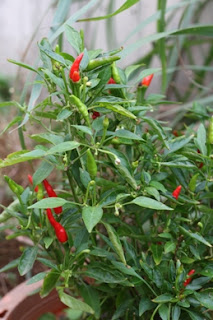

Green curry, as the name says, needs a lot
of green chillies to get natural green colour. Some might misunderstand that
all green chillies can be used in the green curry but in order to get authentic
and traditional flavours you need the right variety.
The above picture is the green chilli plant
grows in my garden in Melbourne
From my cooking experiences, getting the
right ingredients is crucially important to get original and authentic
flavours.
Tuesday, February 26, 2013

Friday, January 25, 2013
Thai Cooking Class, Melbourne
Galangal
(Thai: kha or Chinese: lan jiang)
Galangal has a sharper, more peppery flavour
than ginger. The fresh root can be stored in the fridge for several weeks or
frozen until needed. 

Monday, December 31, 2012


Monday, December 3, 2012

Monday, November 26, 2012
Yam Bean- Chinese Cooking Class

It is nearly summer in Australia. There are many kinds of 'unusual' tropical vegetables are around the corner at the fruits and vegetables shops. Last week when I was shopping at the shop. I was very happy to find yam bean in the market because it normally hard to find and even if I found it, it costs more expensive then meat during other seasons.
A couple of shoppers were looking at me while I was choosing this strange vegetable. They asked me about the yam bean and how to use it. I explained to them and quickly give them few easy tips to eat and cook. They really bought few of them and had a try. I hope they will like it.
What is yam bean? It calls bangkuang (Malay names), is a root vegetable, where also known as jicama. It is crunchy and white inside and beige skin that can easily to peel off. It is so good to eat raw with spicy dip like 'rojak' sauce (Malaysian shrimp paste mixed), or cooked until soft for making 'popiah' either Chinese popiah or Vietnamese version of 'Bo Bia' or Chinese buns; or just for simple stir fry with dried prawns and garlic. The taste of yam bean after cooked has its nature sweet and nice to eat.
Sunday, May 6, 2012
Thai Cooking Class Melbourne-Pandan Leaf

Pandan Leaf
Pandan leaf also known as fragrant
screwpine, it is a long and dark green leaf with the unique scent and
flavour. It is used over Southeast Asia and commonly uses to add into various
cakes and desserts. It is also can be added into the rice (while cooking),
where it imparts a beautifully subtle fragrance and flavour. You can buy it
fresh or frozen from Asian groceries and keep in the freezer. Pandan essence
can be used as a substitute in desserts.
Learn how to use it in Thai cooking class on 23 June 2012 (Sat). More information find in the website.
Learn how to use it in Thai cooking class on 23 June 2012 (Sat). More information find in the website.
Monday, April 16, 2012
Cooking Classes in Melbourne
 Harvest time!
Lady Finger Banana- Taste is good, fresh from the garden.
Monday, February 20, 2012
Fresh & Hot Chilies- Cooking Class
 Fresh chilies from the garden. There are too much to finish. I've decided to make chillies sambal which can be kept in the fridge for very long. Whenever I am busy, I can just put two tablespoons of it and stir-fry with prawns, lady fingers, kankung, fish and others.
Subscribe to:
Posts (Atom)